

Physical therapy credentialing
Enrollment built around the rules that apply only to physical therapists.
We enroll physical therapists, PT groups and new clinics with Medicare, Medicaid and commercial plans, including the parts that are different for PTs: the Medicare site visit, supervision rules and therapy networks run by a separate company.
- Price
- $189 per payer, less in bulk
- Plan for
- 90–120 days, by payer
- Medicare
- 855I, 855B and the site visit
- Upkeep
- CAQH, revalidation, new sites
What makes PT credentialing different
Physical therapists complete the same CAQH profile and payer applications as every other provider, plus steps that apply to almost no one else, starting with how Medicare screens them.
Medicare puts physical therapists enrolling as individuals or as group practices in its moderate-risk screening level, which means an on-site visit before billing privileges are granted, at each revalidation and for every new or moved office. Occupational and speech therapists are screened at the limited level and skip the visit, unless their group includes a PT.
This page covers what is specific to PTs; our main provider credentialing services page covers the rest. The same team runs physical therapy billing, so your enrollments match the way your claims go out.
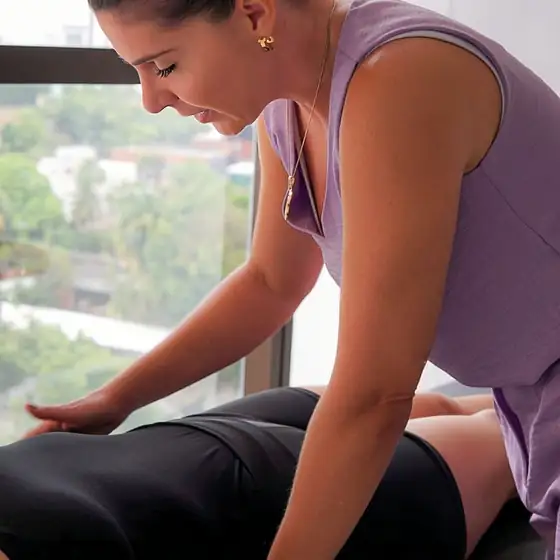
What each payer type asks of a PT
With a complete file. Every payer sets its own pace, so we track each one to a written effective date.
- Documents and CAQH profile1 to 2 weeks once the documents are in hand. Re-attested every 120 days.
- Medicare (PECOS)30 to 90 days, including a site visit before approval.
- Medicaid30 to 90 days by state. Adult PT coverage and limits vary by state.
- Medicaid managed care plansEach plan credentials you separately, on top of state Medicaid enrollment.
- Commercial payers60 to 120 days, plus 2 to 6 weeks to load the contract. Some panels are closed in some areas.
- Therapy benefit managersSome plans contract PTs through a separate company with its own application.
- Medicare revalidationEvery five years, with another site visit.
Medicare enrollment for a PT in private practice
Medicare pays a physical therapist directly only as a physical therapist in private practice. Under 42 CFR 410.60(c), each therapist must:
- Hold a license in the state where they practice
- Practice privately on a regular basis: solo, in a group or partnership, or as an employee of one
- Bill Medicare only for care in the practice’s office or the patient’s home (not a hospital or SNF)
- Use office space the practice owns, leases or rents, used only for the practice
- Treat patients of the practice, with fees collected by the practice
A solo PT enrolls on the CMS-855I. A group enrolls on the CMS-855B as a Physical/Occupational Therapy Group in Private Practice, and CMS expects each therapist it employs to enroll too, reassigning benefits on their own CMS-855I (the old CMS-855R form is discontinued). A PT hired by an orthopedic practice or other physician group is still screened as moderate risk. A clinic billing as a rehabilitation agency takes a different route: a CMS-855A, a state survey and a provider agreement.
PTAs, new hires and supervision
Since January 1, 2025, a PT in private practice can supervise physical therapist assistants under general supervision, so the PT no longer has to be on site while a PTA treats a Medicare patient. CMS made the change in the CY 2025 physician fee schedule final rule, for OT assistants too. Where state law requires closer supervision, state law still applies.
Two rules did not change. A PT who is not yet enrolled can treat Medicare patients only under direct supervision of an enrolled PT. And everyone working under the PT must be an employee of the practice, billed under the supervising therapist, with PTA services paid at 85 percent.
So a new PT’s Medicare application should go in as soon as the offer is signed.
NPIs, taxonomy codes and practice locations
Each therapist has an individual (Type 1) NPI; a practice set up as a corporation, LLC or partnership also needs an organization (Type 2) NPI. In the NUCC taxonomy code set used on the NPI application, a physical therapist is 225100000X, with specialty codes such as 2251X0800X (Orthopedic), and a clinic can use 261QP2000X (Physical Therapy Clinic/Center).
Location details matter more for PTs, because Medicare checks them in person. Before we file, we confirm:
- The legal business name matches exactly across the IRS letter, NPPES and PECOS
- Each office has a street address; post office boxes are not accepted
- Hours are posted and staffed, because the site visitor comes during them
- A home-visit practice lists the area it serves and where it keeps records
- A new or moved office is reported, and each one gets its own site visit
Under the Medicare Program Integrity Manual, if the office is not open, staffed and operating when the visitor comes, the application can be denied. So we file once the office is open and equipped and the posted hours are accurate.
Medicaid and commercial plans
Medicaid starts with your state program. Physical therapy is an optional Medicaid benefit for adults, so states set their own coverage and limits, while children under 21 are covered for medically necessary care through EPSDT. Federal rules define Medicaid physical therapy as services prescribed by a physician or other licensed practitioner, so expect Medicaid to want a prescription on file.
Medicaid managed care plans credential you on their own, and the state must screen and enroll every network provider. A plan can sign you while state enrollment is pending for up to 120 days, so we file both together.
Commercial plans add two PT-specific steps. UnitedHealthcare’s credentialing FAQ sends outpatient therapy providers (physical, occupational and speech) to OptumHealth Physical Health for credentialing and contracting, as it does for chiropractic practices. The same FAQ says it closes requests when it is not accepting new applications for a specialty or area. Both vary by plan and state, so we check each plan before we file.
What credentialing costs
Priced per payer application, so you pay only for the enrollments you need. The more payers you add, the less each one costs.
Standard rate
$189per payer application.
Up to 7 payers
$150per payer application when you enroll with several payers at once.
Up to 20 payers
$120per payer application for a larger rollout.
Every application includes
- A CAQH ProView check and update
- The payer application, filed in that payer’s format
- Weekly payer follow-up until approval
- The effective date confirmed in writing
- EFT and ERA setup so payments arrive
- No setup fee
Each application covers one provider with one payer. Your price is confirmed in writing before we start.
Not enrolled means not paid.
A provider who isn’t credentialed can still see patients. They just can’t bill for them. Pick a start date and the payers you need to see where the gap falls.
Start credentialing the day you sign the contract, not the day your provider starts seeing patients.
Plan a new provider’s start
13weeks of visits could fall before an effective date
With a start in 1 month, Medicare could be effective in 30 to 90 days and commercial plans in 60 to 120.
Typical ranges with a complete application; commercial plans can need 2 to 6 more weeks to load the contract. Each payer sets its own pace, so we track every application to an effective date in writing.
Start credentialingHow we credential a PT or a new clinic
Structure and NPI check
We confirm the practice setup, both NPI types, taxonomy codes and an exact legal name match across IRS, NPPES and PECOS.
Office readiness
Each location is checked against Medicare’s private-practice rules before the site visit: lease, exclusive use, posted hours, staff.
CAQH profile
We build or clean up each therapist’s profile, upload every document and keep it attested every 120 days.
Applications in order
CMS-855B for the group, CMS-855I and reassignment for each PT, Medicaid and its plans, then commercial plans and therapy networks.
Follow-up to approval
Weekly payer calls, a live status tracker, effective dates confirmed in writing, and EFT and ERA set up.
Upkeep
New therapists, new offices, revalidations and re-credentialing go on a calendar we watch.
What we need from you
For each therapist and each location:
- NPI for each therapist
- Group NPI and IRS EIN letter
- State PT license(s)
- Malpractice certificate of insurance
- CV with a gap-free work history
- Lease or deed for each office
- Office hours and service area
- Voided check for EFT enrollment
Questions PTs ask
Something else? Call +1 786-788-7313. A credentialing specialist answers.
All questionsPlan on 90 to 120 days for a full set of payers. Medicare usually takes 30 to 90 days for a PT, and the site visit has to happen before approval: CMS asks its contractors to finish 95 percent of online applications that need one within 50 days, and all of them within 85. Commercial plans take 60 to 120 days plus contract loading. Our credentialing timeline guide has the detail.
In a private practice, yes, under direct supervision: an enrolled PT must be in the office suite during the visit, which is billed under the enrolled therapist. Once approved, the new PT can bill Medicare for their own services up to 30 days before the effective date if circumstances kept them from enrolling sooner. Medicaid and commercial plans set their own rules.
With Medicare, a PTA’s services in private practice are billed by the supervising physical therapist. The PTA must be an employee of the practice, the claim carries the assistant modifier, and Medicare pays 85 percent of the fee schedule amount. Since 2025 that supervision can be general rather than on site, where state law allows. Medicaid and commercial plans set their own rules for assistants.
It happens, and it depends on the plan, the specialty and the area. UnitedHealthcare, for example, closes a request when it is not accepting new applications for that specialty or area. We check before you plan around a payer: whether the closure covers your area, whether a contracted group can add the new PT, and when to apply again.
Credentialing is $189 per payer application, or $150 per payer when you enroll with up to 7 payers and $120 per payer for up to 20, with no setup fee. Each application covers one provider with one payer and includes the CAQH check, weekly follow-up, the effective date in writing and EFT and ERA setup.
Yes. We don’t list our clients on this site, but ask us and we’ll arrange it: with a current client’s permission, we share their contact details so you can hear how we work from them directly.
Specialties we credential
From our guides

Get credentialed with insurance
Every step from NPI to a loaded contract, in the order that saves weeks, with what goes wrong at each one and how to keep it from happening to your file.
How long does credentialing take?
Credentialing times by payer, the rules that set your effective date, and a 120-day plan that keeps a new provider from seeing patients you cannot bill for.

Opening a PT clinic or adding a therapist?
Send us your therapists, offices and payers. We’ll tell you which enrollments you need, in what order, and which effective dates are realistic.